Trade show gamification: a better way to qualify B2B leads
Replace indiscriminate giveaways with a short QR quiz that attracts attention, reveals buying context and gives sales teams a useful reason to follow up.
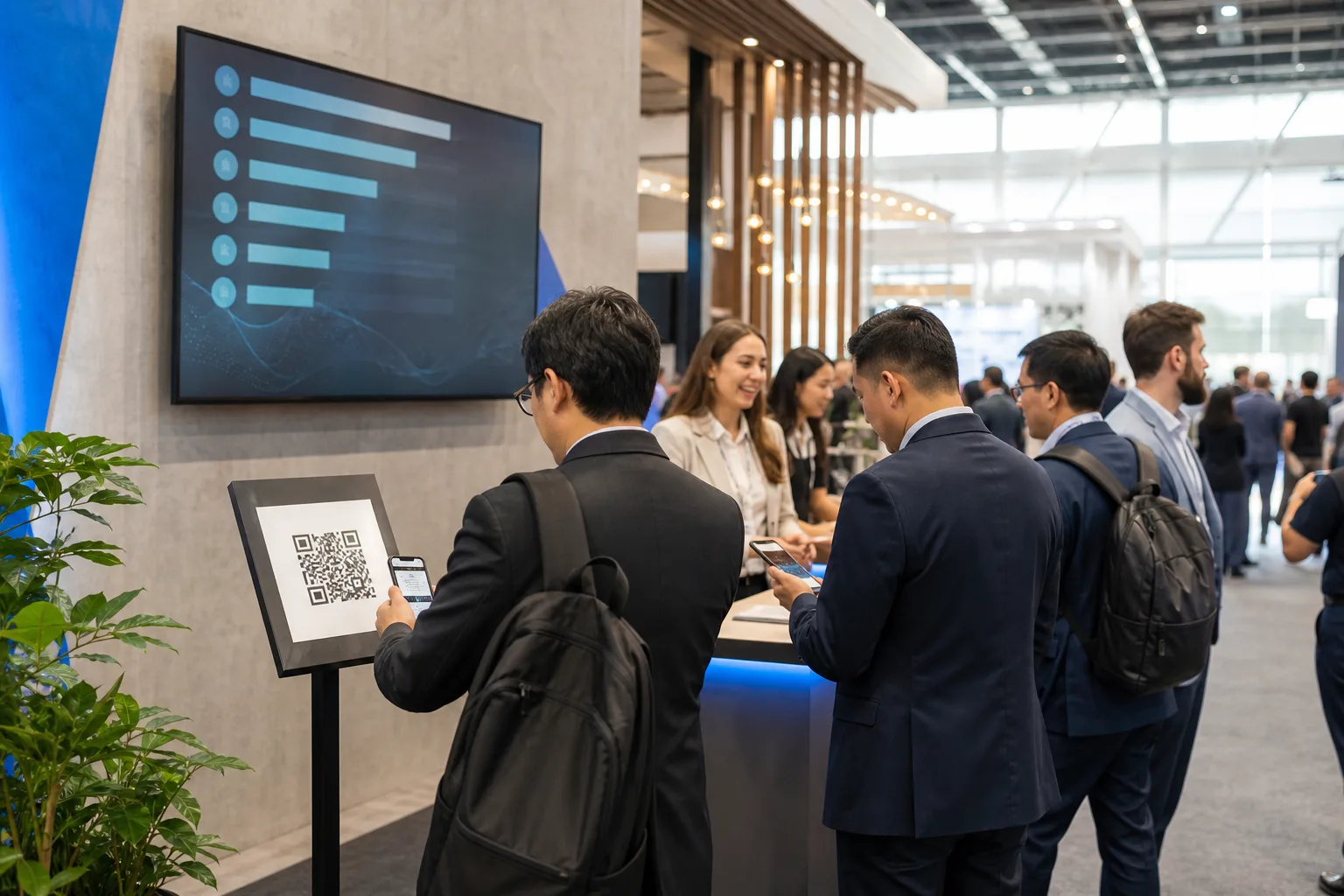
Giveaways attract hands, not necessarily buyers
Pens, sweets and tote bags can bring people to a booth, but they rarely answer the question that matters: does this visitor have a problem your company can solve? A stack of scanned badges is not much better if sales cannot tell which contacts deserve immediate attention.
A short game can turn booth traffic into a more useful exchange. One practical format is a dynamic QR code that opens a three-question industry quiz. After answering, the participant provides contact details to receive a tailored report, claim a relevant discount or enter a prize draw. Their answers can also place the lead into a predefined follow-up segment.
The promise of “300% more qualified leads” should not be presented as a guaranteed outcome. It is a testable target that only becomes meaningful when compared with your own baseline, under similar traffic conditions and with a consistent definition of a qualified lead.
Why a quiz can outperform passive giveaways
It asks visitors to participate
Scanning a code and choosing three answers takes little effort, but it creates more involvement than picking up a brochure. It also gives booth staff a natural conversation opener. Asking why someone chose a particular answer is more relevant than starting with a generic sales pitch.
It captures context, not just contact details
Answers can indicate a visitor's role, primary challenge and likely project timing. The resulting record is therefore more useful than an email address alone. Sales can prioritize the contact and tailor the next message to a stated need.
A live leaderboard provides social proof
A visible ranking signals that other people are already taking part. Correct answers and completion time can add friendly competition and encourage passers-by to investigate. The leaderboard should remain a supporting device, however. If it creates congestion or attracts people who only want a prize, it is not serving the commercial objective.
Design three questions with distinct jobs
A short quiz works when every question earns its place:
- The hook: an interesting industry knowledge question that makes the experience feel like a game.
- The diagnostic question: a choice between genuine business challenges, such as cost, delivery time, process consistency or scaling.
- The qualification question: a signal about project stage, decision-making role or expected timing.
Do not disguise a sales form as a knowledge test. Participants notice when every answer is designed solely to extract information. A balanced quiz provides a moment of challenge while collecting one or two signals the sales team can actually use.
Keep options short, mutually understandable and easy to tap on a phone. The complete experience should take about a minute. Test it while standing, amid background noise and on an ordinary mobile connection rather than only on an office laptop.
Offer value instead of disposable merchandise
The incentive should appeal to the right buyer profile rather than everyone in the exhibition hall. Suitable options may include:
- a report selected according to the participant's main challenge;
- a practical implementation or diagnostic checklist;
- access to a consultation or workshop the team can genuinely deliver;
- a commercially relevant discount;
- entry into a draw for one meaningful, event-appropriate prize.
If a prize draw is used, prepare clear rules and check the requirements applying to the relevant event and jurisdiction. Contact collection should also be transparent. Participants need to know who will receive their data, why it is requested and whether marketing consent is optional.
Build scoring that changes the next action
Marketing and sales should agree on a simple model before the event. For example:
- Priority A: an urgent problem, an active project and influence over the decision;
- Priority B: a relevant need, but a longer timeline or unclear buying role;
- Priority C: educational interest without an identified project.
A Priority C lead is not automatically worthless. It may belong in a useful educational sequence instead of receiving the same sales call as an active buyer. Scoring is valuable only when it determines ownership, timing or content of the next step.
Avoid complicated point systems that no one can explain. A small number of explicit rules is easier to audit and adjust after the first day of the show.
Run the experience as a booth process
Place the QR code at eye level where it can be scanned without joining a queue. The surrounding message should state both the benefit and the expected time. Booth staff need to understand the questions, prize conditions and conversation prompts associated with each result.
A practical flow is:
- A team member invites the visitor to try a one-minute challenge.
- The visitor scans the code and answers three questions.
- The result appears with a clear offer for the next step.
- The answers assign the contact to an agreed segment.
- Staff begin a relevant conversation or trigger the appropriate follow-up.
A dynamic QR code is useful when it enables the destination to be changed without reprinting booth materials. Prepare a fallback for weak connectivity, a failed display or unexpectedly high participation. The experience should still make sense if the leaderboard is unavailable.
Measure whether you achieved a 300% increase
Start by documenting what counts as a qualified lead. Then compare the quiz with your previous event method or a credible control. Useful measures include:
- people who stop at the booth;
- quiz starts and completions;
- valid contact capture rate;
- number of Priority A and B leads;
- post-event conversations, meetings or opportunities;
- follow-up speed and response rate.
Moving from 20 to 80 qualified leads is a 300% increase, but the percentage alone does not establish commercial value. Review whether those leads progressed and whether sales judged the captured context useful. Include the cost of design, prizes, equipment and booth staffing when assessing the result.
Pre-show checklist
- Can the quiz be completed in about one minute?
- Does every question have an engagement or qualification purpose?
- Is the incentive relevant to the desired buyer?
- Are the data notice and consent choices clear?
- Does each segment lead to a defined action?
- Have booth staff rehearsed the invitation and post-result conversation?
- Are measurement, fallback and rapid follow-up ready?
Well-designed trade show gamification is not decorative entertainment. It is a short, measurable journey that earns attention, captures buying signals and gives both the visitor and the sales team a worthwhile next step.
Frequently asked questions
Should visitors submit their details before or after the quiz?
Asking after the questions often creates less friction because the participant has already received value and understands what they will get next. Keep the form short and explain the purpose of data collection and any optional marketing consent clearly.
What are the best three questions for a B2B trade show quiz?
Use one engaging industry question, one question about the visitor's main business challenge and one qualification signal such as project stage, timing or decision-making role. The final choice should match the criteria your sales team uses in practice.
Is a live leaderboard essential?
No. A leaderboard can create curiosity and social proof, but the experience should work without it. Use anonymous names or aggregate results where appropriate, and remove the display if it causes queues, privacy concerns or distraction from useful conversations.
More use cases



Design your own format
Create a quiz, test it with a small group and improve it using real participant responses.
Try Quiz Code